
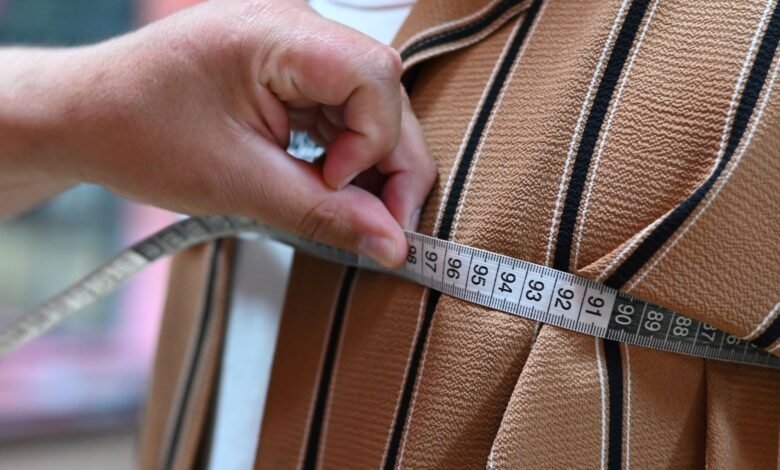
A jacket priced at £120 is in my online shopping cart. The product description states it’s made from a combination of 72% polyester, 24% viscose, and 4% elastane fabric. However, there is no GSM value available for this jacket. As the buyer, I expect this jacket to hold its shoulder line after 40 plus wears during a working season; therefore, a missing GSM value means there is no way to predict if that will happen and whether or not the seams will roll or the collar will collapse.
Knowing the fabric weight in grams per square metre (GSM) directly affects how a garment drapes, how opaque the fabric is, and how strong the garment is. Two garments made with the same fibre content may perform quite differently, as the weight of the fabric within each of their respective square metres could be different. Unfortunately, the GSM rating of a garment is hardly ever displayed on the product page. Knowing the GSM weight allows the buyer to make a choice based on data, rather than merely a guess about the longevity of the garment.
Quick Summary
- GSM measures fabric mass per square metre, shaping how a garment drapes, resists sheerness, and holds its structure.
- The same GSM behaves differently across fibres: a 180gsm polyester jersey drapes and ages nothing like a 180gsm cotton jersey.
- Every capsule category has a functional GSM window — go below the floor and transparency or seam-rolling appears; go above the ceiling and seasonal wearability narrows.
- Measurements taken across budget, mid-range, and investment garments show that price does not always align with adequate fabric weight.
- A reference chart and two in-store checks let you assess weight before committing to a purchase.
A capsule wardrobe built from mid-range to investment pieces (£50–£250) — blazers, trousers, knitwear, and tops in polyester-viscose, cotton, and wool blends — needs to hold shape through 40-plus wears per season, and fabric weight often predicts that outcome better than fiber composition alone.
What GSM actually measures — and why it is not a quality score on its own
GSM stands for grams per square metre. It is the standard unit of fabric mass per unit area, defined by the test methods ISO 3801 and ASTM D3776. Each of these test methods explains how to cut, condition and weigh fabric samples so that 1 mill’s “200 gsm” means exactly the same as 200 gsm from any other mill.
However, GSM does not provide any indication of a fabric’s durability. A fabric may be heavy but if the yarns are weak or if the weave is loose, the fabric will pill, bag out or tear easily. GSM is a density measurement; it tells you how dense a fabric is at a given area, but can only be used as a reliable indicator of garment quality when considered together with the fibre content.
How fiber composition changes what a GSM number means
Fiber composition has a significant impact on the meaning of a GSM value. For example, polyester fibers have a specific gravity of approximately 1.38, while the cotton fibers have a specific gravity of 1.54, as documented by various fibre-property organisations such as Cotton Incorporated.
A 180g/m2 polyester jersey has more mass (bulk) per gram than a 180g/m2 cotton jersey; however, the cotton version usually weighs more, drapes with greater volume, and remains off the body (does not cling). On the other hand, the polyester jersey typically slides off the body easily and returns to its original shape relatively quickly; however, the surface of the polyester jersey is potentially shinier and feels more abrasive than that of the cotton jersey after multiple washings.
When comparing two swatches of fabric (one made from 100% cotton and one made from a polyester/cotton blend), you can see what the GSM indicates; the cotton jersey will hold a fold for a short time after the fold is released, while the polyester/cotton blend will return to its original shape almost immediately. The number of fibre crimps and the amount of tightness in the weave are also factors that contribute to how a fabric will behave.
A wool yarn with a higher crimp factor (e.g., fine crimp) at 220g/m2 will be loftier than a flat-spun viscose yarn at the same weight. Therefore, you may have a 220g/m2 GSM for a wool blazer that appears to be very thick; however, a fitted, unstructured blazer will likely be limp and shapeless because the fabric is a smooth polyester/viscose plain weave. The mass is there; however, the internal friction and architectural structure of the fibres are not. When interpreting GSM and fibre content, look at them together, not individually.

GSM ranges by garment category — lightweight, midweight, and heavyweight in practice
The following are ranges of GSM deemed functional for capsule essentials: T-shirts, 150-200g/m2 (the higher the GSM value, the better the drape and coverage); Blouses; 120-170g/m2; Tailored trousers (i.e., dress/office pants); 220-320g/m2; Unstructured (unlined) blazers (suits); 240-300g/m2; Structured (lined) jackets (blazers); 280-380g/m2; The weight of mid-layers; 250-450g/m2; Ponte mid-layers (jacket/jumpers); 280-350g/m2. Anytime the GSM number falls below the minimum expected range, you run the risk of transparency or loss of shape. When the GSM number exceeds the maximum range, the fabric will not perform well seasonally.

Before making a decision to purchase, hold the fabric up against a lamp or window. When the outline of your fingers can be seen through a garment, it indicates that the garment’s opacity is typically lower than the standard for garments that aren’t lined. A woven shell that is unable to pass this test will inevitably show all the lines from your bra strap or cami underneath it, and as well, any blazer that does not block light will be unable to hold up the crisp collar stand.
T-shirts and Casual Jersey Tops: A cotton or cotton/modal jersey weighing between 150-180 gsm offers a very clean and elegant drape without being too sheer. Fabric below 140 gsm will result in a collar that curls very quickly, and a back panel that is translucent. Fabric above 200 gsm begins to feel like wearing a heavyweight sweatshirt, and makes it less desirable for warm weather.
Blouses and Woven Shells: 120-170 gsm is typically the good range for blouses and woven shells. A blouse made of cotton voile at 120 gsm is meant to look ethereal and flowy. However, polyester crepe de chine at the same weight that is marketed as a year-round capsule will typically disappoint in the area of sheerness and surface wrinkling after just a few wears. As a general guide, look for woven shells made from natural fibers or high-quality viscose blends that weigh 150-170 gsm as, in general, they move with a woman’s body but will still provide full opacity throughout a standard 8-hour workday.
Tailored Trousers: The functional floor for tailored trousers is approximately 220 gsm. Below that weight, fabric does not have the ability to skim the hip area without becoming baggy at the seat, and after just a few wears the crease lines begin to dull and shine. For tailored trousers at 250-300 gsm, the fabric is able to hold a center crease and drape cleanly all year round. As a general rule, if you want to wear your trousers in milder autumn/spring weather, the maximum weight you should look for is approximately 320 gsm.
Unlined blazers. The GSM figure is the number that buyers often miss when they purchase an unlined blazer, which is usually a structural mistake. An unlined blazer should have a GSM of at least 240gsm. While a 200gsm poly-viscose blazer may feel good when first put on, after a season it will roll forward at the shoulder and the hem will flip out because there isn’t enough internal friction within the jacket to hold the outer fabric to the interior of the jacket. Any buyer who has worn a blazer without lining that is under 240gsm for a full work season has typically noticed that the collar stand has completely collapsed or that the shoulder seam has become distorted within ten wears. Blazers with a 260-300gsm GSM rating maintain a crisp look within this same silhouette.
Lined blazers. The liner of a blazer provides the structure for the outer fabric, so the GSM rating of the outer fabric can be 280gsm or slightly less. However, the best year-round blazers for most people will fall between the 300-340gsm GSM range when made from a wool and wool/poly blend. Blazers with a GSM of 380gsm or higher typically become too warm in the summertime for use as an indoor office jacket.
Knitwear/casual sweaters. Lightweight knitwear (250-350gsm) is designed for layering; mid-weight (350-450 gsm) provides for standalone warmth. A fine gauge merino at the 280gsm level punches above its weight because of the loft of the wool, which allows for efficient trapping of warm air.
Ponte/double-knit mid-layer. These structured jersey type fabrics need a GSM rating of 280-350 gsm to achieve the smooth and forgiving fit that they provide. A ponte blazer at the 240gsm level will bag at the elbow within one sitting; however, a 320gsm ponte blazer is reliable in terms of recovery.
What our measurements found: a price-tier comparison across eight garments
For the purpose of determining how closely the price of garments corresponds with fabric weight, a total of 8 swatches from three fabric weight categories (budget, mid-range and premium) was weighed using the ISO standard for measuring and calculating total weight of a fabric sample (ISO 3801). Each swatch was cut to a size of 10x10cm, weighed on a digital precision balance and the weight multiplied by 100 to convert to GSM (grams per square meter). Below is a table that contains these measurements.
| Garment Type | Price Tier | Approx. Retail Price | Measured GSM | Fiber Composition | Within Functional Range? | Structural Assessment Note |
|---|---|---|---|---|---|---|
| T-shirt | Budget | £12 | 135 | 100% cotton | No (below 150) | Sheer across the back; neckline ribbing lost tension after three washes. |
| T-shirt | Mid-range | £35 | 185 | 95% cotton, 5% elastane | Yes | Opaque, good recovery; held shape through 30+ wash cycles. |
| Unlined blazer | Budget | £60 | 200 | 68% polyester, 28% viscose, 4% elastane | No (below 240) | Shoulder seams rolled forward after the second wear; hem flipped persistently. |
| Unlined blazer | Mid-range | £120 | 250 | 72% polyester, 24% viscose, 4% elastane | Yes (floor) | Adequate for occasional use; light-transmission check showed moderate opacity; collar required steaming after packing. |
| Unlined blazer | Investment | £210 | 300 | 55% wool, 40% polyester, 5% elastane | Yes | Crisp shoulder line retained through 50 wears; heavy enough to drape cleanly over a fist without slipping. |
| Tailored trouser | Budget | £40 | 185 | 64% polyester, 34% viscose, 2% elastane | No (below 220) | Seat bagging visible after half a day; centre crease faded to a soft roll. |
| Tailored trouser | Mid-range | £95 | 255 | 50% wool, 45% polyester, 5% elastane | Yes | Crease held through two wears between pressings; fabric recovered from sitting without shine. |
| Knitwear (crew neck) | Budget | £28 | 210 (acrylic) | 100% acrylic | No (below 250 for standalone) | Pilling appeared on the side seams after five wears; lacked the loft to insulate without a shell layer. |

As demonstrated by the weighing of budget-tier unlined blazers, the weight of 200 GSM ultimately supports the earlier noted conclusion regarding the fabric being too light to adequately prevent the sliding of fibres on the outer surface, which frequently results in shoulder panels rolling forward. Conversely, the mid-tier tailored trouser, which weighed 255 GSM, was much more closely aligned with the required functional weight of trousers, and provided the draping effect associated with trousers costing nearly twice as much.
Based on the data presented, three trends emerge. First, the majority of budget-tier garments will fall below the functional GSM floor weight requirement of structured-style garments, such as unlined blazers and tailored trousers, by 30-50 GSM in many cases. Second, T-shirt fabric weight is only weakly correlated to price; for example, a budget-tier (£12) T-shirt at 135 GSM is too sheer to be worn without another layer beneath it, whereas a mid-tier (£35) T-shirt at 185 GSM has an entirely acceptable amount of weight, and an investment tier T-shirt may be made from equally-weighted fabric but of finer, longer-staple cotton rather than heavier weight.
A mid-range blazer (£120) weighing 250 gsm demonstrates that satisfactory fabric weight does not necessitate a high-priced purchase, because the additional cost at the higher classifications is for better-quality fibres and greater precision finishing rather than simply increased gsm.
How to check GSM before you buy — online and in-store
Online. Most retailers who specialize in suit/womenswear use the ‘fabric weight’ section of their websites to indicate GSM for each item. Therefore, if you are looking for this information on a website that sells mass-produced clothing, you will most often not find this itemised. If you do not see the number listed, check the item’s description for words such as midweight or substantial — although not definitive, these are useful in giving you an indication of how the retailer classifies the weight of the garment. If the retailer has live chat available, ask them directly: ‘What is the fabric weight in gsm for this blazer?’ Getting a simple yes/no response will take seconds to provide and reduce uncertainty surrounding the fabric weight.
If you cannot obtain a gsm number, fabric composition offers a partial estimate. For example, a 100% polyester blazer, or polyester/rayon blends with little or no wool, will often fall at the lower end of the scale (below 220 gsm). A blazer made from a blend of wool and polyester (at least 50% wool) will more likely fall within the area of 260-320 gsm. This is not an absolute guideline but rather a way to eliminate items of clothing that will not structurally hold up.
In-Store. Pro tip: you can check the weight of the fabric by placing it over your loosely closed fist. The weight of a fabric for a structured category of a capsule wardrobe must have sufficient mass to hold a soft fold for at least a moment before slipping out of your hand. An exceptionally thin woven fabric will slip away from your hands as soon as it is released. The weight test, therefore, is a reliable indicator of any blazer or trouser that has too low of a weight, even if the hand feel is smooth.
The light transmission test that was discussed earlier can be used on any piece that is not lined. If you would like to know the approximate GSM after you purchase an item and it does not have a tags stating the GSM, simply cut a 10×10 cm swatch from the seam allowance (preferably from an inconspicuous area), weigh it on a digital kitchen scale to the nearest gram, then multiply by 100. This number will give you an approximate GSM and will allow you to measure the actual weight against the functional GSM range before determining if the item will eventually make its way into the capsule wardrobe.
When creating a travel-specific capsule wardrobe, brands tend to make their garments lighter than what would typically be found in the functional GSM range because it will fit into a carry-on or similar luggage much easier. So, a 200gsm travel blazer will pack into a carry-on with much less effort than a 300gsm travel blazer. However, the 200gsm travel blazer is going to experience faster surface abrasion where it folds due to carrying capacity after several days, much less retaining its shape after being folded in the bag for several days and will soften sooner than a 300gsm travel blazer (due to being carried in a bag for several days). Therefore, the lighter weight should only be considered if you know the length of the trip and whether there will be the opportunity to wash or dry-clean during the trip (as you will need to weigh the trade-offs of less durability and less ability to retain shape).
Common purchasing mistakes
When shopping for new clothing, it is helpful to look at product pages and frames of reference. For example, the purchase of a luxury blazer might feel more luxurious than the expansion of midweight blazer priced at £90, due to its lower GSM. The luxury would be in the feel of the blazer in hand, and not how long it will last during that time period. However, not trusting the price is a big mistake – the challenge here is that it does not accurately reflect what a material will provide when used as a structural material, but rather what that material will be able to provide.
The next common trap is to see that an item is “lightweight” in its description, and to think the designer intended it to be lightweight, rather than recognizing the garment was made using a structural weakness. The design may be intended for warm-weather worn and thus would fall short of the minimum 140gsm requirement set for a year-round shell. Marketing language describes a product’s potential rather than providing confirmation of the actual product’s quality or intended use. If you intend to wear an item for 40-50 days during a work season, the functional gsm range should be confirmed against the properties of the lightweight fabric; if gsm information is not disclosed on a product page, it can be estimated using the in-store checks mentioned previously.
GSM reference chart for capsule wardrobe staples
Use this chart to assist you in deciding on a garment purchase. First review the functional weight range (GSM) window for a garment category, and compare it against any figures listed on the product page or determined through a ‘physical checks’ process.
| Garment Type | Functional GSM Floor | Functional GSM Ceiling | Best-Performing Fiber Types at This Weight | Capsule Longevity Note |
|---|---|---|---|---|
| T-shirt & casual jersey top | 150 | 200 | Cotton, cotton-modal, cotton-elastane | At the lower end, collars curl within 10–15 washes; at the upper end, the tee wears warm and holds its neckline for multiple seasons. |
| Blouse & woven shell | 120 | 170 | Cotton voile, cupro, high-quality viscose, silk-cotton blends | Below 140gsm, a camisole underneath becomes non-negotiable; above 160gsm, the shell works alone through a full workday. |
| Tailored trouser | 220 | 320 | Wool-polyester, wool-viscose, cotton-wool blends | At 220–250gsm, press the crease every 2–3 wears; at 280–320gsm, the crease holds for 5–7 wears with steaming. |
| Unlined blazer | 240 | 300 | Wool-polyester, wool-viscose, cotton-linen (lined sleeves optional) | At 240gsm, expect to steam the collar weekly; at 280gsm+, the collar stays upright between wears. |
| Lined blazer | 280 | 380 | Wool-rich blends (≥50% wool), wool-polyamide | The lining adds structure, so a 280gsm blazer can still perform if the shell weave is tight; beyond 360gsm it becomes a cool-weather jacket. |
| Casual knit / sweater | 250 | 450 | Merino wool, lambswool, cotton-cashmere blends | Lightweight knits (250–320gsm) work for layering; midweight (350–450gsm) provides standalone warmth with less pilling at the higher end. |
| Ponte or double-knit mid-layer | 280 | 350 | Viscose-nylon-elasthane ponte, cotton-nylon double-knit | Below 280gsm, elbow bagging appears within hours; at 320gsm+, the recovery keeps the silhouette sharp all day. |
A traditional capsule collection should be created for each of our four seasons but should also use at least one gsm from the midrange per winter season. The best example is tailored midweight trousers made from a stable wool/poly blend, within the 250 gsm to 300 gsm range.
Winter Ready: A Capsule Wardrobe Designed for the Seasonal Climate. T-shirts in Cotton Layer are good choices at 180 – 200 gsm and will be comfortable under a blazer in winter and as a stand-alone product in the summer months. Blazers are the most affected by changing seasons. A wool-rich blazer with a fabric weight of 280 – 320 gsm can be worn throughout the autumn, winter, and early spring months. However, a separate summer version at 240 – 260 gsm, possibly made from a cotton-linen blend, would keep a capsule wardrobe functional without overheating. Most knitwear requires at least two different weights: lightweight for layering and midweight for use during coldest weeks.
Frequently asked questions
What is the best way to determine if the weight of a fabric is acceptable for purchase if there is no GSM on the product page and the retailer does not respond to my inquiries?
The in-store hand-drape test and light-transmission check are the most reliable proxies. If buying online without GSM, use fibre composition as a guide: high polyester-viscose blends with no wool tend toward the lighter end, while wool-rich blends rarely fall below 240gsm.
For travel-specific capsule wardrobe pieces, will the functional GSM range change due to the need for the fabric to travel well (i.e., resist wrinkling while in luggage and maintain shape after being folded in a bag for several days)?
Travel pieces shift toward the lower end to save pack space, but the trade-off is real: a 200gsm travel blazer wrinkles less yet loses collar sharpness faster than a 280gsm version. For trips over a week, choose a midweight fabric with high twist yarn — it resists creasing better than ultralight cloth.
Should the default fabric weight target across all wardrobe categories in hot and humid climates be lower than normal due to the effects of humidity? Or is the target for lower fabric weights only for certain types of garments?
This shift applies mainly to blazers, knitwear, and lined garments. T-shirts and trousers should stay in their functional ranges; for blazers, an unlined cotton-linen blend at 220–250gsm outperforms standard wool-polyester.
At a specified GSM, will a garment made of natural fibres outlast a garment made of synthetic fibres regarding overall structure and appearance throughout multiple seasons?
Not always. High-twist polyester-viscose blends with tight weaves at 280gsm can outlast loosely constructed wool blends of the same weight, as longevity depends on weave density, yarn twist, and finish, not GSM alone.
Written By: Armughan Akbar | Fashion & Wardrobe Content Writer, shetrended.com
Reviewed and fact-checked by Shetrended Editorial Team against established textile and garment certification standards, including OEKO-TEX®, GOTS, and Woolmark®.
